
What is an Earthquake Zone?

Often referred to as a seismic zone, it is a geographical area with a higher likelihood of experiencing an earthquake. These zones are identified based on the potential for tectonic activity and the history of seismic events in a specific region. Earthquake zones are crucial for assessing the risk and potential impact of earthquakes in an area, which, in turn, informs building codes, construction practices, and insurance requirements.
Identifying Earthquake Zones
Earthquake zones are determined through a combination of geological research, historical earthquake data, and the observation of ongoing tectonic activity. Key factors considered when identifying earthquake zones include:
1. Historical Seismic Activity: Areas with a history of significant earthquakes are often classified as earthquake zones. This historical data helps geologists understand the patterns of seismic activity in a region.
2. Tectonic Plate Boundaries: Locations near the boundaries of tectonic plates are more likely to experience earthquakes. This is especially true along convergent and transform plate boundaries.
3. Faults and Fault Lines: Faults are fractures in the Earth's crust along which seismic activity can occur. Earthquake zones often align with fault lines.
4. Seismic Monitoring: Ongoing monitoring of ground movement and seismic activity is used to detect changes and predict potential earthquake hazards.
Reading Earthquake Zone Maps
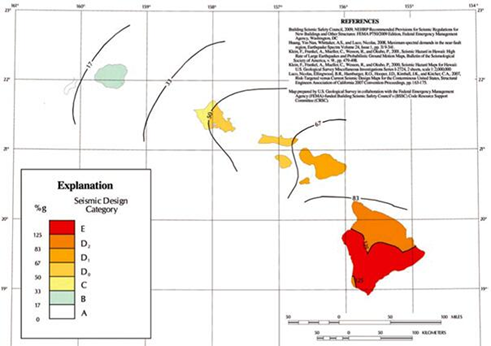
The colors on the maps represent "seismic design categories" (SDCs), which indicate the probability of encountering earthquake-induced shaking at different levels of intensity. (Professionals involved in building design and construction refer to these SDCs as outlined in building codes to ascertain the necessary seismic resilience for new structures.)
The subsequent table provides an overview of the hazard level linked to each SDC and the corresponding degrees of shaking. It's worth noting that, while there is the potential for more intense shaking within each SDC, the described shaking levels are more probable occurrences.
SDC/Map Color | Earthquake Hazard | Potential Effects of Shaking |
A/White | Very small probability of experiencing damaging earthquake effects. | |
B/Gray | Could experience shaking of moderate intensity. | Moderate shaking—Felt by all, many frightened. Some heavy furniture moved; a few instances of fallen plaster. Damage slight. |
C/Yellow | Could experience strong shaking. | Strong shaking—Damage negligible in buildings of good design and construction; slight to moderate in well-built ordinary structures; considerable damage in poorly built structures. |
D/Light BrownD1/Darker BrownD2/Darkest Brown | Could experience very strong shaking (the darker the color, the stronger the shaking). | Very strong shaking—Damage slight in specially designed structures; considerable damage in ordinary substantial buildings with partial collapse. Damage great in poorly built structures. |
E/Red | Near major active faults capable of producing the most intense shaking. | Strongest shaking—Damage considerable in specially designed structures; frame structures thrown out of plumb. Damage great in substantial buildings, with partial collapse. Buildings shifted off foundations. Shaking intense enough to completely destroy buildings. |
*Abbreviated descriptions from The Modified Mercalli Intensity (MMI) Scale.
SDCs consider the soil type at a location since subpar soils can notably amplify earthquake-induced shaking. For the sake of simplification, these maps presume the use of typical Site Class "D" soils, the most prevalent type.
It's essential to bear in mind, while examining the maps, that regions with elevated earthquake hazards don't necessarily equate to heightened seismic risks. Seismic risks, defined as the expected losses stemming from exposure to earthquake hazards, depend not only on the hazard levels but also on the population and property exposed to these hazards and the vulnerability of people and property in the face of these hazards.


How to Obtain Earthquake Insurance
QuakePrice.com specializes in earthquake insurance. We search the marketplace for a low-cost option for earthquake coverage. To get an obligation free quote, give us a call at (866) 407-8253 or send us an email at support@inxinsurance.com.
Disclaimer: The information on this site is provided for general guidance and informational purposes only. We make no guarantees regarding the completeness or reliability of the content. All liability for any reliance on the information is expressly disclaimed.
